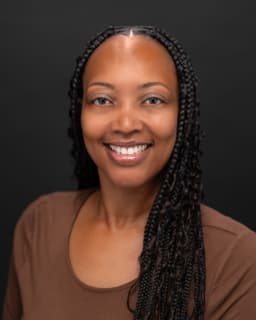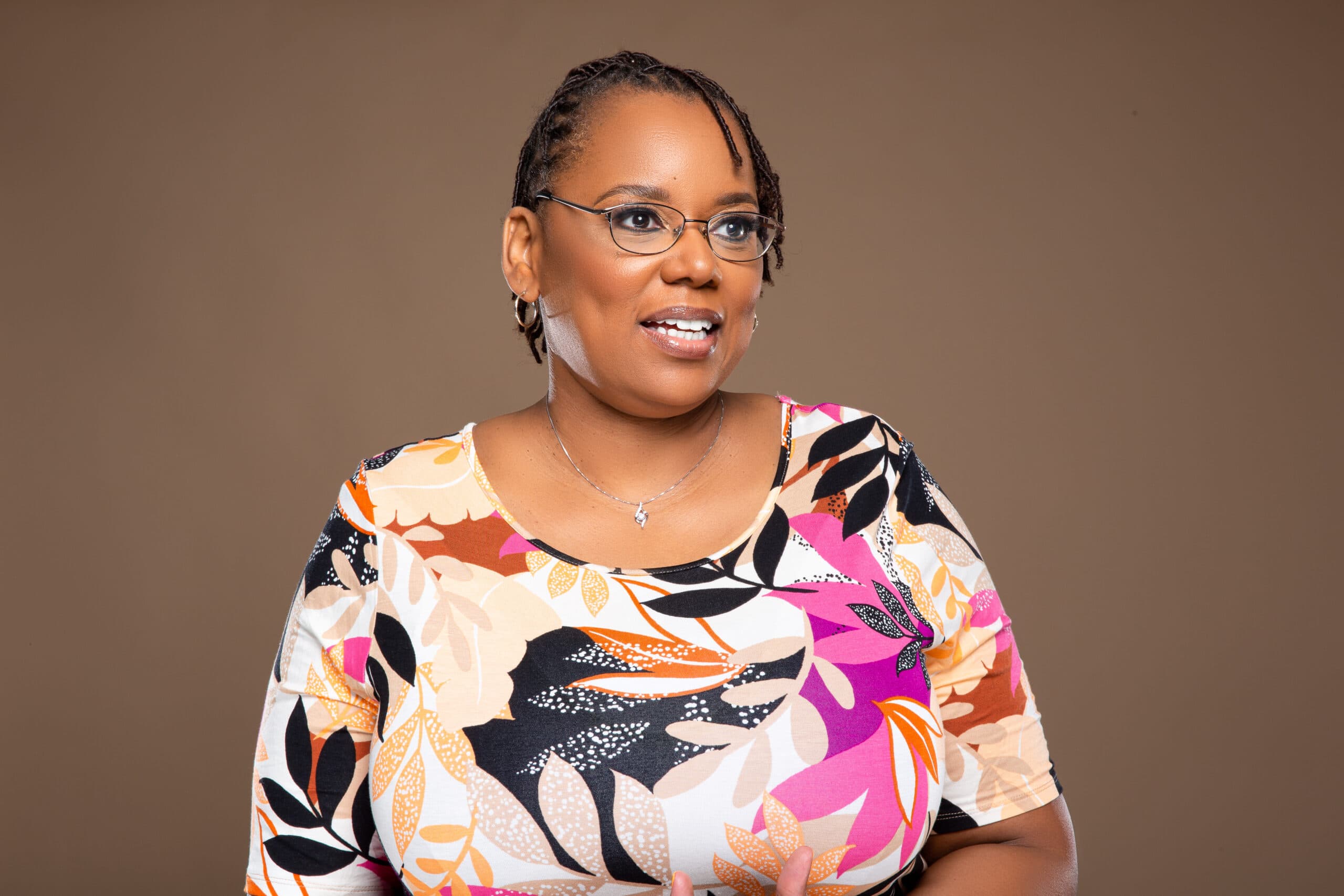
Dr. Carlotta A. Berry’s journey with engineering is anything but ordinary. From her early days at Spelman College to her current role as a professor of electrical and computer engineering at Rose-Hulman Institute of Technology, Berry has consistently challenged the norms of STEM education.
Alongside her work in mobile robotics and human-robot interaction, she is a mentor, author, and advocate dedicated to diversifying technology and empowering historically marginalized communities.
Early Roots
Berry’s STEM foundation began at Spelman College, where she earned a mathematics degree in 1992, then continued at Georgia Institute of Technology (Georgia Tech), earning a bachelor’s in electrical engineering through a dual-degree program in 1993, according to her LinkedIn. She went on to earn a Ph.D. in electrical and computer engineering at Vanderbilt University in 2003, focusing on human-robot interfaces for mobile robots.
“Going from Spelman to Georgia Tech was like night and day. I went from a very small liberal arts college with 2,000 students — no more than 30 in a class — to basically an engineering factory with thousands of students … I had professors who did not know my name and didn’t know who I was,” she told AFROTECH™.
Berry’s early experiences with robotics shaped her teaching approach, which, according to her LinkedIn, began in 2003 as an assistant professor at Tennessee State University and continued when she joined the Rose-Hulman Institute of Technology in Terre Haute, Indiana, in 2006.
“I was disappointed because my first exposure in college to robotics were these high-tech robots that we could write code for but could not touch,” she said. “These robots were actually behind a glass cage. And that was very disappointing for me. I said someday if I ever did became a college professor, I was going to do robotics in a way that was more authentic, so that people could actually interact with them.”
Equity In Robotics
Berry’s work extends beyond research, creating pathways for underrepresented individuals in STEM. In 2020, as her website states, she launched two nonprofits — Black in Engineering and Black in Robotics — along with her educational consulting firm, NoireSTEMinist, which provides workshops and educational resources.
“A big part of the mission for these programs is to increase visibility and access to communities that are often overlooked,” she shared with AFROTECH™.
In her teaching, Berry consciously cites the work of Black researchers and women, exposing students to a wider range of voices in STEM. She also makes STEM engaging by connecting it to students’ personal interests.
“You meet a lot of kids who go, ‘Oh, I just want to play basketball,’ or ‘I just want to do hair,’ or ‘I just want to make clothes,’” she explained.
“I can now make connections between the things they love and something in STEM, such as a basketball playing robot, making electronics lights for your clothes, or there’s a a young woman on Instagram who had teenage girls in a salon doing a hair show where they had to design the electronics for the hair … That’s a big part of how I want people to engage with the work I do,” she continued.
Her commitment to equity is woven directly into her robotics projects, which she describes as a way to both bring people to STEM and bring STEM to people.
“By naming my Hip-Hop slam poetry robots Martin Luther Zing, Rosie Sparks, Sojourney Toots, and Malcolm Xplorer, I can teach the technical aspects of robotics while also highlighting Black leaders and innovators,” she said.
Storytelling And Leadership
Berry has also expanded her advocacy by using storytelling to engage young learners through her children’s series, “There’s A Robot!,” which, she told AFROTECH™, blends STEM education with diverse narratives.
“By modeling this in K-4th grade children’s books, I’m getting them ready for the skills they need by the time they get to college,” she said. “Parents and teachers say to me, ‘I’ve never seen a book like this with Black kids on the cover.’ That’s because once again, we don’t see them.”
She has also published two romance novels, “Breaking Point: Chandler’s Choice” and “Elevated Inferno: Monet’s Moment,” under the pen name Carlotta Ardell, according to her website.
“One [of my books] was inspired by something I saw on Instagram. There was an Instagram story about this young lady who was stuck on an elevator and she was live streaming her rescue and … the firefighter who came to rescue her was very, very handsome. And so I had said ‘I’m gonna write a book about this,’ but in my story, the guy’s going to be single and the young lady is a graduate student in computer science in robotics,” Berry explained.
“And so I integrate not just being a black woman in STEM, but also she’s talking about her challenges with her her master’s advisor and that she’s becoming more distracted with this relationship and with their notoriety because of social media,” Berry continued.
Additionally, Berry stresses that mentorship and community engagement are central to her work.
“Although I can speak at conferences, publish papers in journals, and teach my classes, I have to leave the classroom and go into the streets to meet people where they are. Community is the infrastructure that innovation stands on,” she said.
Looking ahead, Berry — who was named to Forbes’ 50 Over 50: Innovation list in 2024 — said she will continue teaching at the Rose-Hulman Institute of Technology while also pursuing personal aspirations for the future.
“I hope to someday write my autobiography,” she told AFROTECH™. “I already have the title, ‘From Barbies to Bots: My Unexpected Journey to STEM.’ I also hope to launch a diverse cross-stitch company where I make and sell patterns about the authentic Black American experience.”