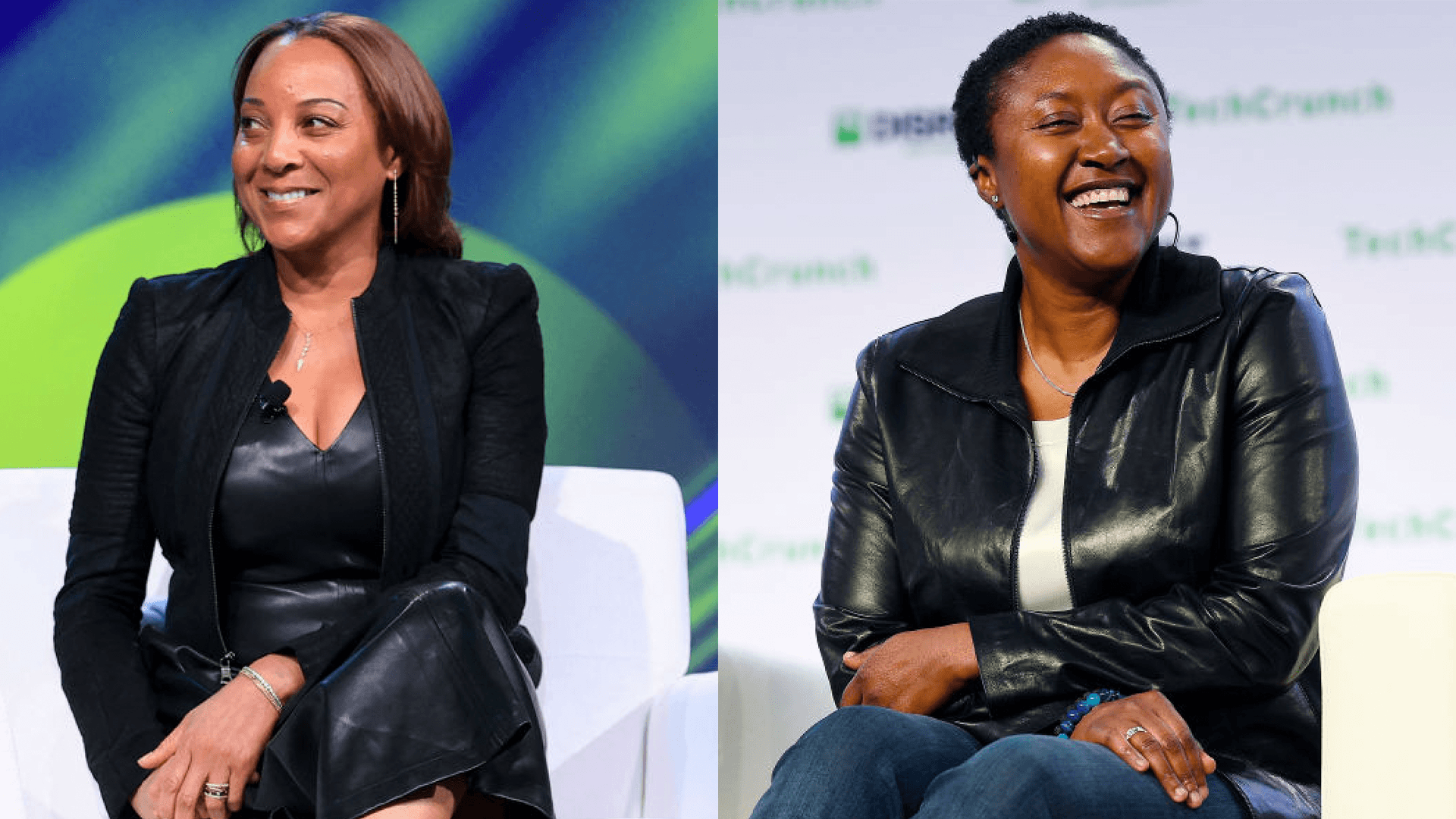
These two Black women leading autonomous vehicle companies are leaders to watch out for in 2026, according to Forbes.
Aicha Evans
Aicha Evans, who has led Zoox as CEO since 2019, oversaw a major industry milestone when Amazon acquired the self-driving auto startup in 2020 for about $1.2 billion, as AFROTECH™ previously reported.
The acquisition aimed to advance ride-hailing while keeping Zoox as a standalone business under Amazon. Evans said the deal “solidifies Zoox’s impact on the industry” and expands opportunities to develop fully driverless vehicles.
Before joining Zoox, Evans spent more than a decade at Intel in senior engineering and strategy roles, bringing extensive tech and operational experience to her leadership at the startup.
In an interview with Bloomberg, Evans discussed the recent launch of Zoox’s self-driving shuttles in Las Vegas, calling it “more than a decade in the making.”
“We finally launched it essentially to the public, which is really nice,” she said. “If you’re in Vegas, please download the app.”
At the time of the interview, Evans noted that Zoox operated at five Strip locations — Resorts World Las Vegas, New York-New York Hotel and Casino, AREA15, Luxor®, and Topgolf — offering free rides. The company has since announced a multiyear partnership that will add T-Mobile Arena as a stop, Las Vegas’ major sports and entertainment venue, according to an AEG Worldwide press release, which notes that the Sphere will be added as well.
Riders can select destinations through the app, and routes are adjusted based on real-time Strip conditions.
“You might go to the same location several times and go a slightly different way because we’ll adjust depending on what’s going on,” Evans said in the Bloomberg interview. She added that there is no waitlist in Las Vegas — riders can sign up and ride immediately.
Evans emphasized Zoox’s measured approach, prioritizing serviceability and scalable operations. She described the passenger experience as “more akin to getting into an airport shuttle … you don’t feel like you’re in a consumer car.”
Zoox’s vehicles feature four inward-facing seats, each equipped with individual climate and music controls, and a lounge-style interior, according to its website. Evans said the company plans to gradually add more locations and vehicles within Las Vegas before beginning to collect fares, which will occur only after regulatory approval and completion of the internal learning phase.
Zoox has also begun offering rides to select users in San Francisco and plans to expand to Austin and Miami.
Tekedra Mawakana
Tekedra Mawakana, also on Forbes’ “Women to Watch 2026” list, joined Alphabet’s Waymo in 2017 as global head of policy, later becoming chief operating officer and then co-CEO in 2021, per LinkedIn. She previously held senior roles in government affairs and operations at eBay, Yahoo, and AOL.
At TechCrunch Disrupt 2025, Mawakana sat down with Kirsten Korosec, TechCrunch’s transportation editor, to discuss Waymo’s growth and safety focus. When Korosec asked the audience who already rides Waymo regularly, several hands went up.
“You’ve got some super fans,” Korosec said.
Mawakana said she rides in Waymo vehicles when visiting its operating markets — Los Angeles, Phoenix, Austin, Atlanta, and San Francisco. She shared that expansion planned is for 2026 to Washington, D.C., Miami, Denver, Dallas, Seattle, Nashville, and London.
According to Mawakana, the company aims to reach 1 million weekly trips by late 2026, building on more than 10 million fully autonomous rides to date. Some markets still require regulatory approval before a fully driverless service can begin.
“We’re extraordinarily incremental,” she said. “We have to earn trust.”
At the time of the interview, Mawakana said that freeway driving was only available to employees in San Francisco, Los Angeles, and Phoenix. It has since opened freeway services to the public, as the company noted in a November 2025 blog post.
On safety, Mawakana said Waymo publishes frequent software updates and continues improving performance. Many incidents, she noted, involve human drivers rear-ending Waymo vehicles.
“Crashes will happen because we’re on roads with humans,” she said. “But we’re here to change the status quo.”
Waymo completes roughly 450,000 paid rides each week across its operating cities, based on investor disclosures, CNBC reports — nearly double its April 2025 milestone of about 250,000 weekly rides.